CSR Commitment
FONG SHANN PRINTING PHILIPPINES, INC. is engaged to employee’s working management, working place, ethical rules and environment protection complying with applicable laws and regulations to aligned in our business culture.
FONG SHANN PRINTING PHILIPPINES, INC. established Administration Department to perform the Code of Conduct. We assure that the employees and suppliers receive the related information conveniently and the services provided to our customers satisfy the request by relevant laws.
FONG SHANN PRINTING PHILIPPINES, INC. ensures to continuously implement the following policy in business operations, and invites our suppliers and subcontractors to adopt, support and apply it in their area.
-To provide employees with a healthy and safe working place
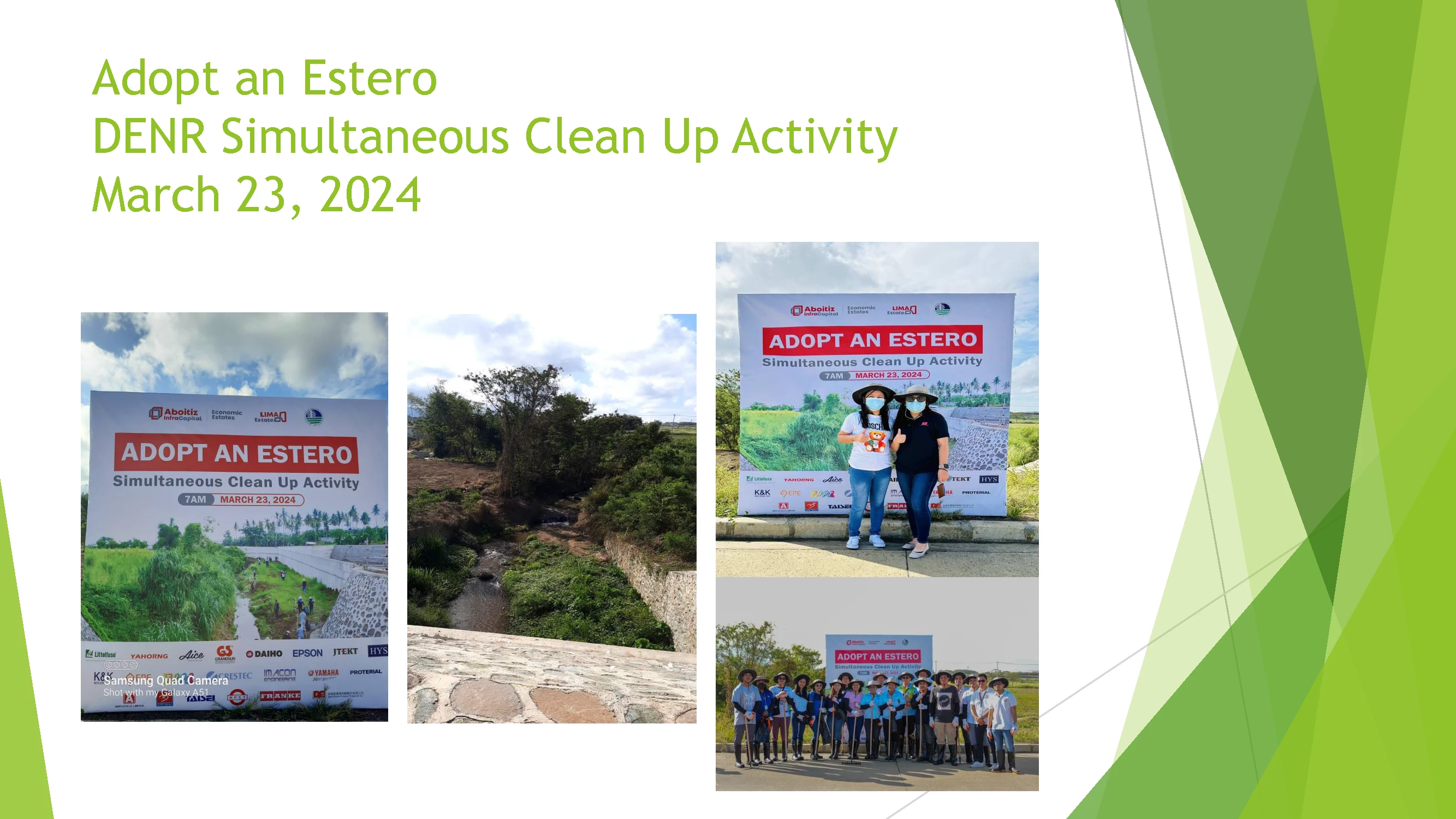
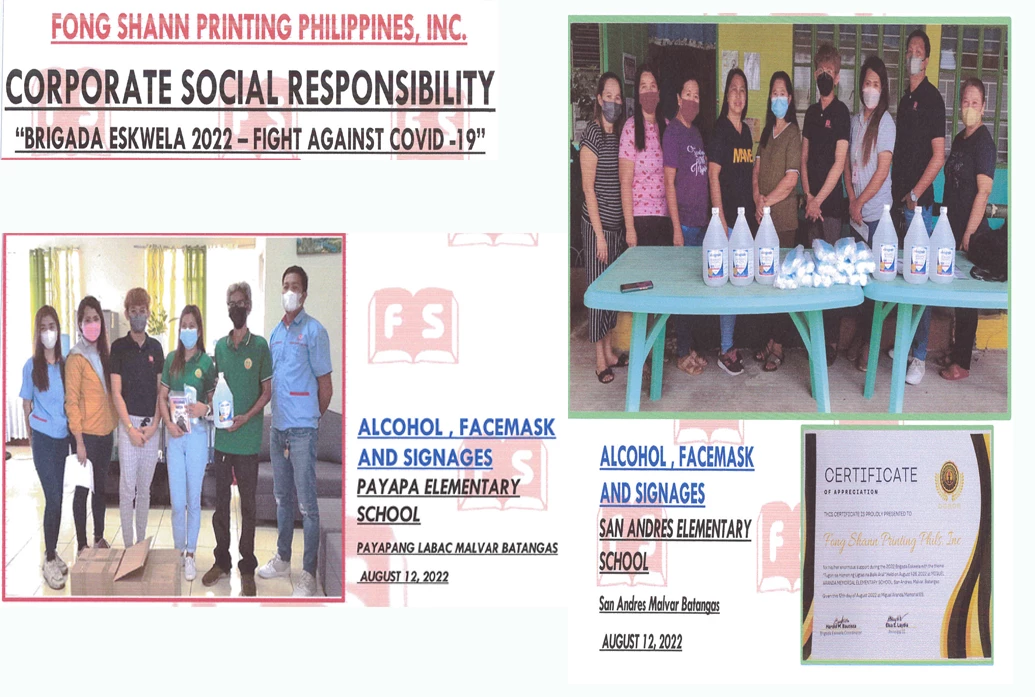
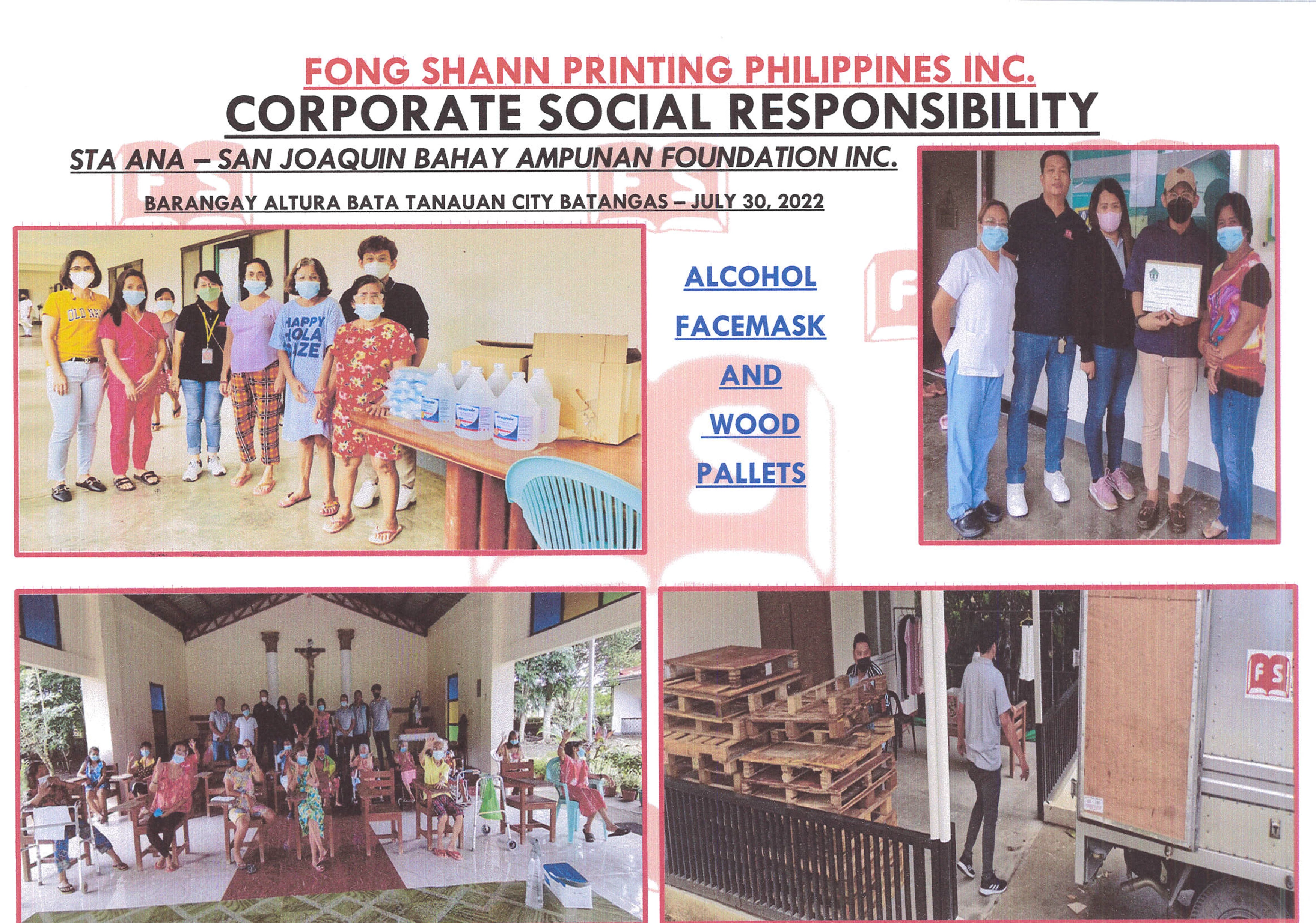
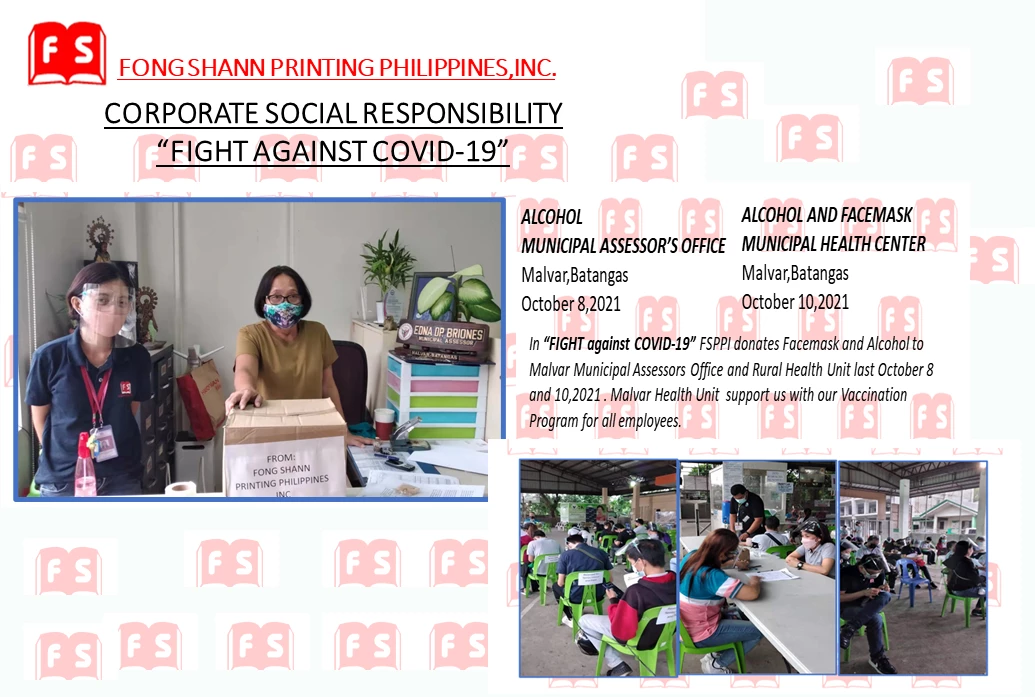
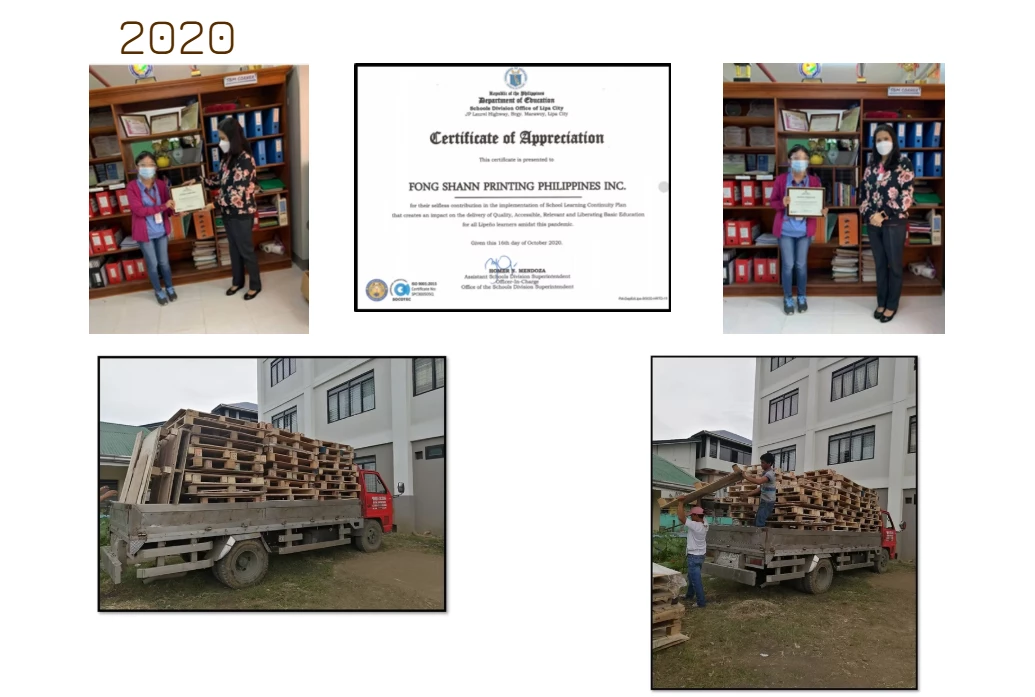
-To encourage the employees engaged in the development of community
-To keep good faith business and create the company value and enhance the interests of shareholders
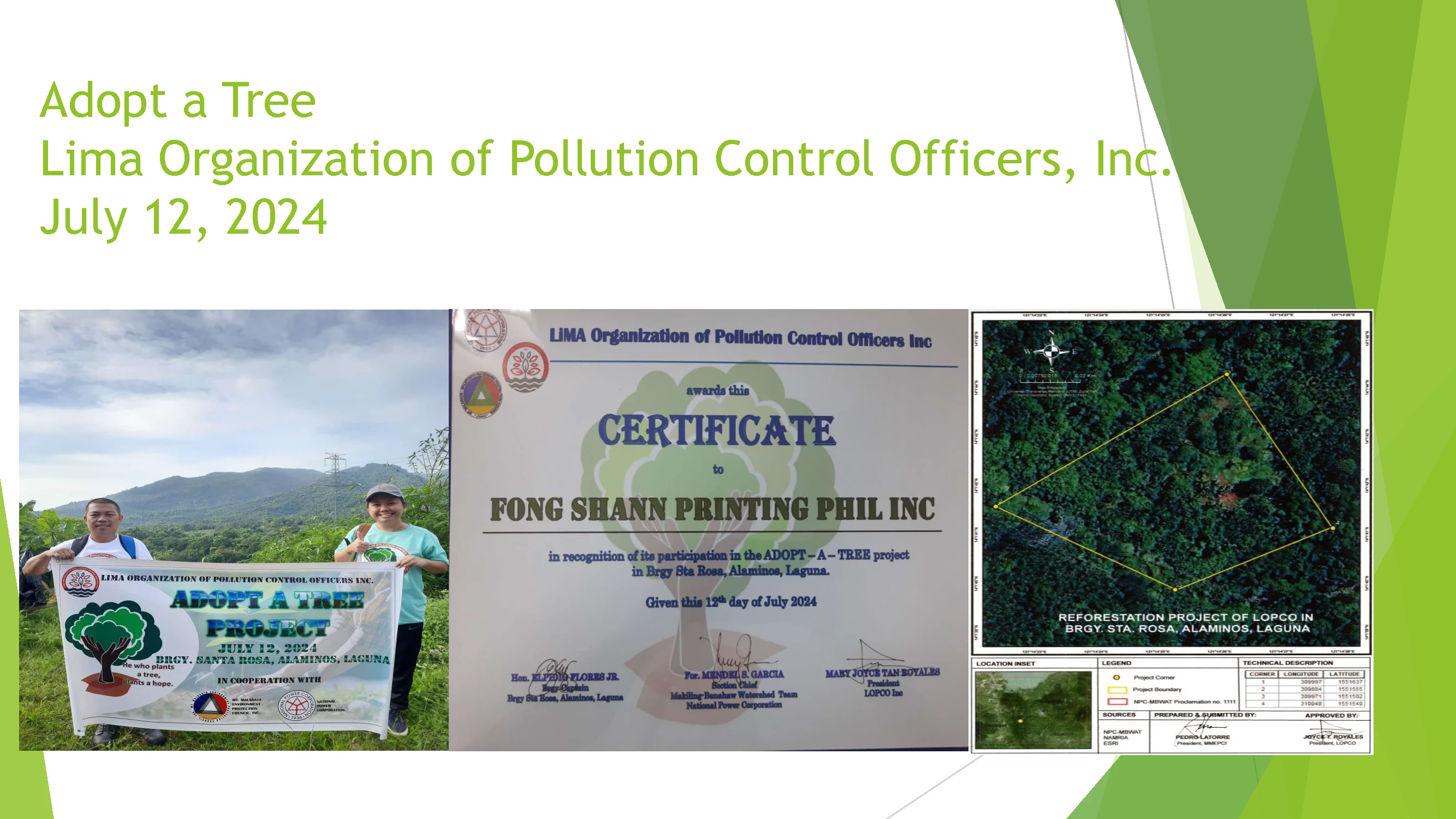
-To minimize the effects on the environment meanwhile protect it
-To comply with laws and regulations
GHG Reduction Target
Fong Shann Printing Philippines Inc. (FSPPI) is committed to progressively reducing its greenhouse gas (GHG) emissions and supporting climate change mitigation through energy efficiency, renewable energy utilization, responsible resource management, waste reduction, and other appropriate GHG reduction initiatives.
The Company shall establish its GHG reduction targets based on its GHG inventory, verified or validated baseline data, significant emission sources, operational conditions, technological feasibility, available resources, and applicable environmental objectives and commitments.
6.9.5.1 GHG Baseline
FSPPI shall establish a GHG emissions baseline for its current operating facility located at:
Lot 1 Block 8-F Phase 3 Extension, Lima Technology Center Special Economic Zone, Barangay San Fernando, Malvar, Batangas.
The previous GHG data from the Company's former leased facility at Block 3 Lot 4 Phase 3, Lima Technology Center SEZ, Malvar, Batangas may be retained as historical/reference information; however, it shall not automatically be used as the baseline for the new facility because of differences in building size, equipment, production conditions, energy consumption, and operational activities.
The Company shall establish a representative baseline using available data for the current facility. Where sufficient historical data are not available, FSPPI shall continue collecting reliable activity data and establish the baseline once adequate and representative data are available.
The baseline shall, where applicable, include:
• Purchased electricity consumption;
• Diesel and other fuel consumption;
• Fuel consumption of forklifts, generators, boilers, and company-controlled vehicles;
• Refrigerant replenishment and fugitive emissions;
• Employee commuting;
• Business travel;
• Purchased raw materials and relevant goods and services;
• Waste generation and disposal;
• Inbound and outbound transportation; and
• Other relevant Scope 1, Scope 2, and Scope 3 emission sources identified by the Company.
Initial GHG Reduction Target
FSPPI shall initially target a minimum 1% reduction in GHG emissions against the established baseline, subject to confirmation of the baseline year, inventory completeness, operational conditions, and availability of reliable data.
The 1% reduction shall be treated as an initial improvement target and shall be reviewed periodically based on the Company's actual GHG performance and the effectiveness of implemented reduction measures.
Where appropriate, FSPPI may establish additional or more ambitious reduction targets after sufficient baseline data have been accumulated and evaluated.
Renewable Energy Target – Solar PV
As part of its GHG Reduction Plan, FSPPI shall evaluate and pursue the installation of a solar photovoltaic (PV) system to generate renewable electricity for use within the Company's facility.
The solar PV initiative is intended to:
• Increase the proportion of renewable energy in the Company's electricity consumption;
• Reduce dependence on purchased electricity generated from conventional energy sources;
• Reduce associated Scope 2 GHG emissions;
• Improve energy efficiency and resource management;
• Support long-term GHG reduction objectives; and
• Contribute to the Company's climate change mitigation efforts.
The Company shall conduct a feasibility assessment considering available installation area, structural capacity, electricity demand, system capacity, expected solar generation, safety requirements, permitting requirements, investment cost, and expected environmental benefits.
Following approval and installation, FSPPI shall monitor the electricity generated by the solar PV system in kWh and evaluate its contribution to the Company's electricity consumption and GHG reduction performance.
Long-Term Climate Change Commitment
FSPPI recognizes that achieving meaningful GHG reduction requires continuous improvement and long-term implementation of energy efficiency, renewable energy, process optimization, resource conservation, waste reduction, and other emission-reduction measures.
The Company's long-term aspiration is to progressively reduce its carbon footprint and contribute to the transition toward a low-carbon and climate-resilient operation, with the ultimate objective of supporting carbon neutrality in accordance with future corporate strategy, available technology, applicable standards, and scientifically credible GHG reduction pathways.
The previously stated aspiration of reducing more than 800,000 metric tons of CO₂ by 2050 shall not be adopted as an FSPPI facility-level target unless supported by a documented corporate GHG inventory, organizational boundary, baseline, emission forecast, and approved reduction pathway demonstrating how the target was derived.
Any future long-term GHG reduction or carbon-neutrality target shall be formally documented and approved by Management and shall identify the applicable organizational boundary, baseline year, target year, emission-reduction pathway, scope coverage, monitoring methodology, and responsible departments.
Monitoring and Review
The GHG reduction target shall be monitored and reviewed at least annually as part of the Company's environmental performance evaluation and Management Review.
The Company shall evaluate:
• Actual GHG emissions against the established baseline;
• Progress toward the GHG reduction target;
• Energy and fuel consumption trends;
• Renewable electricity generated and consumed;
• Effectiveness of energy-efficiency initiatives;
• Progress of the solar PV project;
• Changes in significant emission sources;
• Operational changes affecting GHG emissions; and
• Opportunities for establishing more ambitious GHG reduction targets.
Where the target is not achieved, FSPPI shall evaluate the reasons for the deviation and identify appropriate corrective actions, improvement measures, or revised objectives and targets.
Solar Energy and Renewable Energy Initiative
As part of its commitment to climate change mitigation and the reduction of indirect GHG emissions, Fong Shann Printing Philippines Inc. (FSPPI) shall evaluate and pursue the installation of a solar photovoltaic (PV) system at its facility to generate renewable electricity for use in company operations.
The proposed solar PV system is intended to:
• Generate renewable electricity from solar energy for use within the FSPPI facility;
• Reduce the Company's dependence on electricity generated from conventional fossil-fuel-based sources;
• Reduce associated Scope 2 GHG emissions from purchased electricity;
• Improve the Company's energy efficiency and overall environmental performance;
• Increase the use of renewable energy within the Company's energy mix;
• Reduce long-term electricity consumption and associated environmental impacts, subject to the actual performance of
the installed system; and
• Support FSPPI's commitment to climate change mitigation and continual improvement of its Environmental Management
System.
The solar PV installation shall be evaluated based on technical feasibility, available roof or installation area, solar resource availability, structural capacity, electrical system requirements, safety considerations, regulatory and permitting requirements, projected electricity demand, expected energy generation, investment cost, and potential GHG emission reductions.
Where the project is approved, FSPPI shall establish an implementation plan covering the system design, procurement, installation, commissioning, operation, maintenance, monitoring, and performance evaluation.
The Company shall monitor the electricity generated by the solar PV system, where practicable, in kWh, and compare the renewable electricity generated with the Company's total electricity consumption. The resulting data may be used to evaluate the contribution of the solar PV system to the Company's GHG reduction objectives.